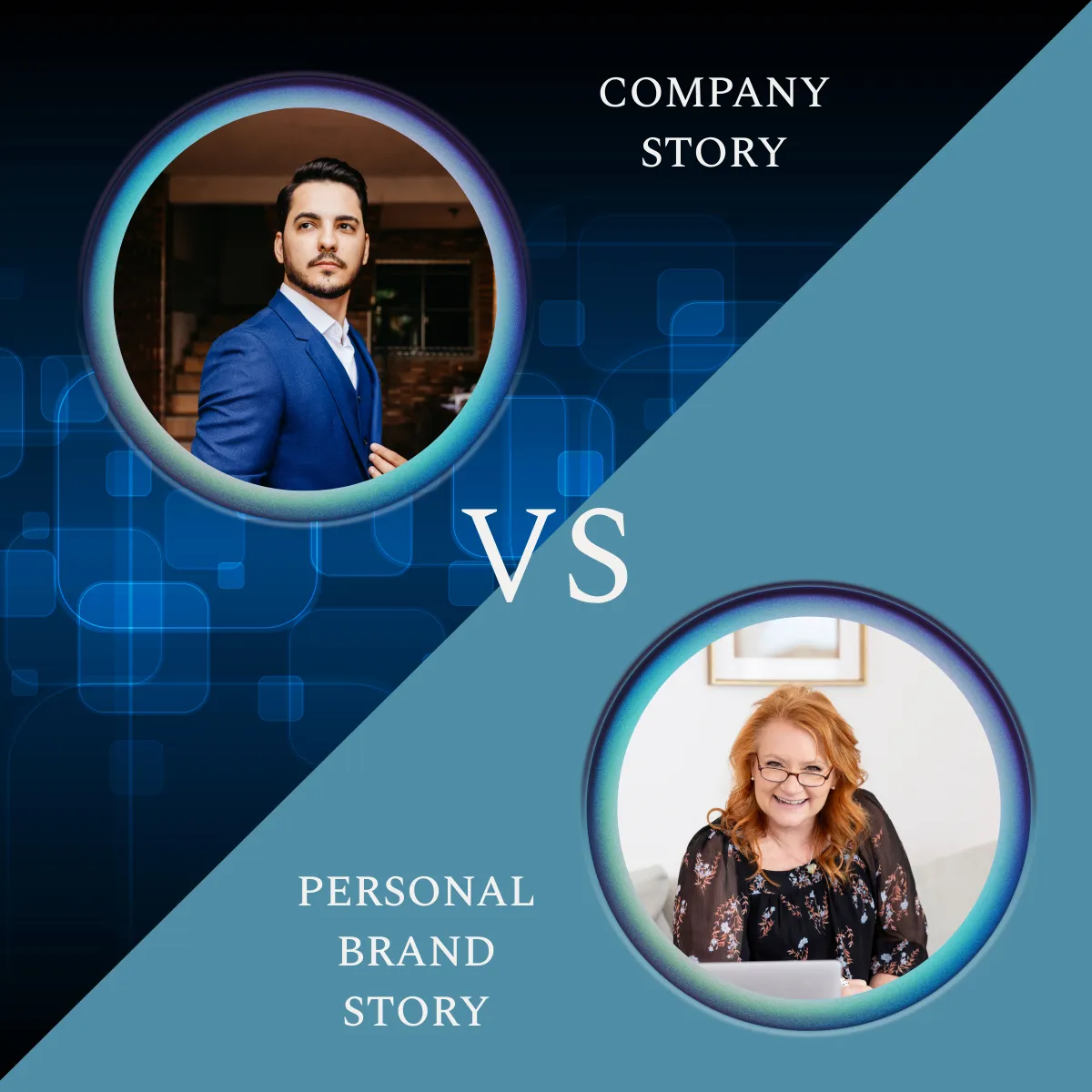
Why Your Business Story Isn't Working (And It's Not What You Think)
Why Your Business Story Isn't Working (And It's Not What You Think)
Part 1 of "Story First, Strategy Second: The Foundation Series"
Let's talk about that About page you've rewritten seventeen times.
You know the one. It's sitting in your drafts folder right now. Or maybe you published it months ago and cringe every time someone mentions they read it.
Here's what usually happens: We sit down full of determination. We're going to write the perfect business story! We start typing. Delete everything. Start again. Delete again. Read three more blog posts about storytelling. Try one more time.
And somehow it still sounds like either a boring resume or an oversharing therapy session. There's no in-between.
If this sounds familiar, take a breath. The problem isn't your writing skills. It's not even your story.
We've been trying to squeeze ourselves into a storytelling framework that was never designed for businesses like ours.
The Story Template Everyone's Teaching (And Why It Feels So Wrong)
Here's the business storytelling advice floating around everywhere:
"Share your journey of overcoming adversity!" "Show how resilient you are!" "Prove your expertise through your achievements!" "Tell them about the obstacles you conquered!"
This is the "Company as Hero" framework. It sounds like this:
"When I started my business, I faced [insert dramatic challenge]. Through determination and innovation, I developed [my amazing solution]. Now I've helped [impressive number] of clients achieve [remarkable results]. My journey from struggle to success proves I can help you too."
Sound familiar?
And if writing this kind of story makes you want to throw your laptop across the room?Your instincts are correct.
This framework wasn't created for businesses like ours.

Where This Storytelling Style Actually Comes From
The "Company as Hero" approach works great for:
Tech startups pitching to investors.They need to prove they won't fold at the first sign of trouble.
Big corporations building brand reputation.Think Apple's innovation stories or Patagonia's environmental journey.
B2B companies selling complex solutions.Enterprise buyers want evidence you can handle their scale.
In these situations, the company's journey matters because customers are buying capability and track record.
When Airbnb tells its pandemic pivot story, that's relevant. Potential hosts and guests want to know the platform can weather challenges.
When a software company showcases how they solved scaling problems, enterprise clients need that proof.
But here's the thing.That's not what we're selling.
Why This Framework Fails for Heart-Centered Women Entrepreneurs
If you're building a coaching business, a consulting practice, a creative service, or anything relationship-based, this storytelling approach creates four big problems:
Problem #1: It Puts Us Center Stage (And That Feels Terrible)
Most of us were raised to support, encourage, and lift others up. We spent careers being team players and helpful experts.
Now suddenly we're supposed to talk about "my journey" and "my success" and "my resilience"?
The internal alarm bells start ringing:
Is this helping anyone or just stroking my ego?This sounds so self-centered.My clients don't care about my struggles. They have their own.Why am I making everything about ME?
This isn't imposter syndrome talking. This is our values system correctly flagging that something's off.
Problem #2: Our Clients Aren't Buying What We Think They're Buying
Think about the women we work with. Accomplished women over 40 in life transitions. Women building heart-centered businesses. Women wanting meaningful work, not just revenue.
They're not primarily buying our credentials or methodology. They're asking completely different questions:
Does this person actually understand what I'm going through?
Have they worked with people like me?
Will they genuinely care about my success?
Do we see the world the same way?
These are relationship questions, not resume questions.
Sure, our qualifications matter. But they're the baseline, not the deciding factor.
Problem #3: Success Stories Create Distance, Not Connection
When we tell stories about conquering obstacles and achieving success, there's a hidden comparison happening.
"I was struggling, but I figured it out.""I was stuck, but I broke through.""I faced obstacles, but I conquered them."
The unspoken message?"I'm stronger/smarter/more resilient than you currently are."
That creates distance instead of connection. It triggers all that comparison and inadequacy we're already dealing with.
(And let's be honest. Most of us are our own worst critics. We really don't need help in the "feeling inadequate" department.)
Problem #4: It Celebrates the Destination, Not the Journey
Traditional business storytelling is all about the victory. Before and after. Problem and solution. Challenge and triumph.
But accomplished women in transition don't need to hear about someone else's victory lap.
We need to hear:
"Hey, figuring this out takes time. That's normal." "You don't need to have it all worked out before you start." "Your questions are actually signs of wisdom, not weakness." "Being in the messy middle is exactly where growth happens."
One approach says:"Look how I succeeded! You can too if you're strong enough."
What we actually need:"You're exactly where you should be. Let me help you navigate this."
Completely different energy, right?
What Happens When We Try to Force It Anyway
When we attempt to squeeze ourselves into "Company as Hero" storytelling, one of three things usually happens:
Option 1: We avoid writing anything at all.
The About page stays blank. Email sequences don't get written. Marketing materials gather digital dust. We tell ourselves we'll "get to it later" when we figure out how to make it feel right.
(Spoiler: Later never comes because the framework will always feel wrong.)
Option 2: We write it but apologize constantly.
"I know this sounds braggy, but..." "I don't usually talk about myself, but..." "Sorry for the long story, but..."
The apologizing completely undermines any authority we're trying to build. We end up sounding uncertain about the very expertise we're offering.
Option 3: We publish it and quietly die inside every time someone reads it.
We followed "the rules" of business storytelling. It checks all the boxes. And it sounds like absolutely everyone else.
Worse? It doesn't create the connection we were hoping for. It just sits there being...fine. Mediocre. Forgettable.
The real problem?Our marketing isn't failing because we're bad at storytelling. It's failing because we're using the wrong structure for our audience and business model.
The Framework That Actually Works for Heart-Centered Businesses
So if "Company as Hero" doesn't work, what does?
Client-Centric Storytellingwhere:
Our client is always the protagonist.Never us.
We're the guidewho understands their journey. Not the hero who conquered it.
Their transformation is the compelling story.Not our business success.
Permission and understanding come first.Before we offer solutions.
This isn't about hiding our expertise or pretending we don't know things. It's about smart positioning that actually serves our audience.
The fundamental shift looks like this:
Instead of:"Here's my journey and what I accomplished"Try:"Here's your journey and how I can help you navigate it"
Instead of:"Look at what I overcame"Try:"I understand what you're facing"
Instead of:"I figured this out and succeeded"Try:"You don't have to figure this out alone"
See how different that feels?
Quick Self-Check: Is Your Story Company-Centered or Client-Centered?
Pull up your current About page or homepage. Count how many times you use these words:
Company-Centered Red Flags:
I, me, my, we, our (when talking about achievements)
My journey, my story, my success
How I overcame, what I learned, when I discovered
My unique methodology, my approach, my framework
Client-Centered Green Lights:
You, your (when describing their situation)
Your journey, your challenges, your goals
What you're experiencing, how you're feeling
How I can help YOU, what's possible for YOU
The sweet spot?About 70% client-focused language, 30% about your experience as their guide.
If your content flips that ratio, you've got the framework backwards.
And that's okay! Now we know what to fix.
What This Means for Your Marketing This Week
Deep breath. We're not rewriting everything today.
Let's make one small shift that changes how your story lands:
This week's tiny action:Pick ONE piece of content. Your homepage hero section. Your email signature. Your LinkedIn About section. Just one.
Ask yourself:
Who's the hero of this story? Me or my client?
Am I showcasing MY success or understanding THEIR struggle?
Does this create distance (look how great I am) or connection (I see where you are)?
Does this give permission or create pressure?
Make one edit.Shift the focus from your journey to their journey. From your achievement to their potential. From what you did to how you can help.
Before (Company as Hero):"After 20 years in corporate marketing, I left to start my own consulting business. The first two years were challenging, but I persevered and developed my signature framework. Now I help other women entrepreneurs achieve the success I've built."
After (Client as Hero):"You've spent years building expertise, and now you're ready to share that wisdom on your own terms. But the transition from employee to entrepreneur? It feels overwhelming. I've guided dozens of accomplished women through this exact journey. You don't have to figure it out alone."
Same expertise. Same credibility.
One version makes us the hero. The other makes them the hero with us as their guide.
The Real Truth About Storytelling Discomfort
That uncomfortable feeling when you try to write traditional business stories? That's not a weakness.
That's valuable information.
Our internal compass is correctly identifying that "Company as Hero" doesn't match how heart-centered businesses actually build trust.
We need a different framework entirely. One designed specifically for accomplished women serving other accomplished women. One that gives permission instead of creating pressure. One that builds connection instead of showcasing conquest.
That framework exists.And over the next few weeks, we're going to walk through exactly how it works.
Together.
Because honestly? Most of us are figuring this out as we go. And that's not just okay. That's the whole point.
Strategy + Heart = Superpower means we don't choose between effective storytelling and authentic values. We just need the right framework.
What's Next in This Series
Next week in Part 2, we'll explore the fundamental shift that makes everything easier: positioning ourselves as guides instead of heroes (and why this actually increases our authority).
Your Assignment This Week
Do this: Pick one piece of your current content. Use the self-check questions above.
Notice: How does it feel when you read it? Who's the hero? What's the "I/we" versus "you" ratio?
Shift: Make ONE edit that moves from company-centered to client-centered.
Share: What did you notice? Drop a comment or send me a message. I genuinely want to hear what you discover.
Go Deeper
Want more on authentic storytelling?
📖Read: Part 6 of our "Website & CRM for Heart-Centered Women Entrepreneurs" series on Narrative Marketing for the storytelling foundations that make everything else work.
🎧Listen: "You Matter in Business" Podcast Episode 42: "Aligning Your Brand: The Power of Authentic Storytelling," where we dive into how creating a perfectly aligned business is like orchestrating a five-star restaurant experience.
📧Subscribe: Join accomplished women getting "Brand Alignment Insights" delivered monthly with practical strategies that actually work on LinkedIn. Subscribe here
📸Ready for complete alignment? Your story needs to be both written AND visible. When you're ready to align your photos, messaging, and strategy so everything works together, let's talk. Schedule a Brand Alignment Assessmentor learn about the Brand Alignment Path Cohorts.
P.S.If you've been doing business storytelling "wrong" until now? Welcome to the club. Most of the advice out there wasn't designed for businesses like ours anyway. Now we know. And knowing is honestly the hardest part.
