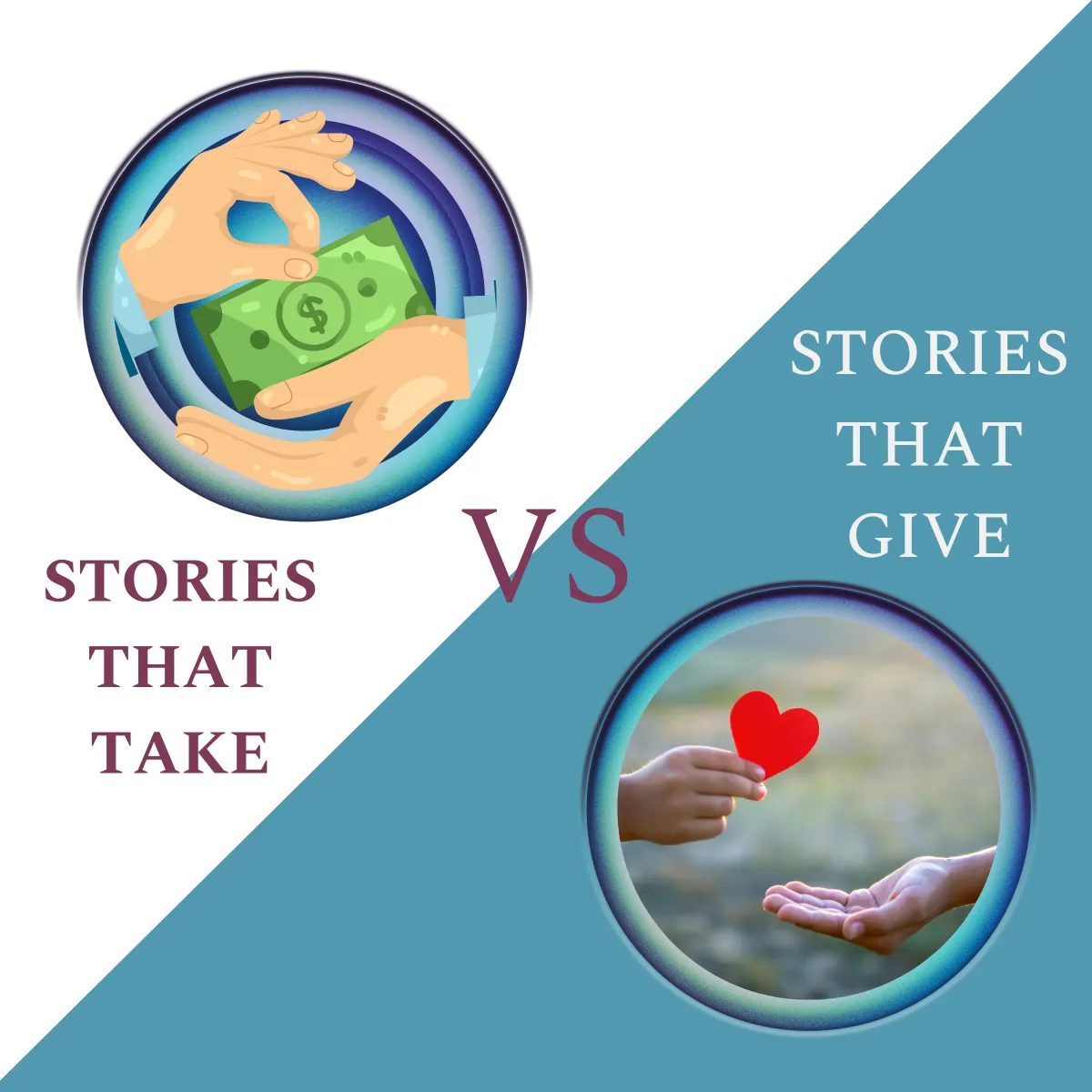
The Permission Framework: Stories That Give Rather Than Take
The Permission Framework: Stories That Give Rather Than Take
Part 2 of "Story First, Strategy Second: The Foundation Series"
I need to tell you about the moment I realized permission was the secret ingredient most business storytelling was missing.
A brilliant woman sent me her website copy for feedback. She'd spent 25 years in healthcare administration. She knew operations inside and out. She was launching a consulting business to help medical practices actually function efficiently.
Her qualifications? Impeccable.
Her About page? Made me want to give her a hug and a glass of wine.
Not because it was bad. Because it was apologetic from start to finish.
"I hope I can help..." "I'm still learning, but..." "I know I don't have all the answers..." "Maybe my experience could be useful..."
This accomplished professional was apologizing for her expertise while simultaneously trying to prove she was qualified enough to charge for it.
Talk about an impossible position.
She was stuck between two terrible options:
Option A: Showcase her achievements and risk sounding arrogant.
Option B: Minimize her expertise and risk sounding unqualified.
Neither felt right. So she chose
Option C: Apologize for existing while hoping someone would hire her anyway.
(Spoiler: That strategy doesn't work great.)
Here's what she didn't know. There's a completely different framework. One where we don't have to choose between confidence and compassion. Between authority and authenticity.
Want to hear about it?

What Permission-Based Storytelling Actually Means
Permission-based storytelling isn't about asking permission to market our business. (Please don't do that. It's painful to watch.)
It's not about apologizing for charging money. (Also painful. Also, don't.)
It's about giving our ideal clients permission to be exactly where they are while we guide them forward.
Here's the fundamental difference:
Traditional storytelling TAKES from our audience:
Takes their attention to focus on our story
Takes their energy to be impressed by our success
Takes their confidence through comparison to our achievement
Takes their hope if they can't match our resilience
Permission-based storytelling GIVES to our audience:
Gives validation that their struggle is real and normal
Gives safety to be imperfect and figuring things out
Gives hope that change is possible for them too
Gives clear direction for the path forward
One approach drains. The other fills up.
Guess which one creates better client relationships?
The Five Permission Statements Every Heart-Centered Business Needs
Accomplished women entrepreneurs carry invisible weight. Especially those of us over 40. We're navigating things younger entrepreneurs can't even imagine yet.
Our storytelling needs to acknowledge this reality.
Permission #1: "You're Exactly Where You're Supposed to Be"
What we're secretly afraid of:
"I should be further along by now"
"Everyone else has this figured out"
"I'm too old to be starting over"
"I should already know how to do this"
What permission sounds like:
"You're exactly where you're supposed to be in your journey. The fact that you're here, asking questions, seeking clarity? That's not evidence you're behind. That's evidence you're growing. You don't have everything figured out yet. Nobody does when they're building something new."
Why this matters:
When we give explicit permission to be imperfect, we lower the barrier to engagement. Women who were too intimidated to reach out suddenly feel comfortable starting a conversation.
Women who were waiting until they were "ready" realize they can begin now.
(Spoiler: Nobody ever feels completely ready. We all just start anyway.)
Permission #2: "You Don't Need to Know Everything"
What we're secretly afraid of:
"Real entrepreneurs know all this stuff already"
"I'm not tech-savvy enough"
"I should understand this without asking"
"Questions reveal I'm a fraud"
What permission sounds like:
"Expertise in your field doesn't automatically translate to expertise in marketing, technology, or business systems. The fact that you're asking questions? That's not imposter syndrome. That's wisdom. You know what you don't know. You're seeking clarity instead of pretending. That's actually strength."
Why this matters:
Most of us spent careers being the expert in the room. Admitting we don't know something feels like professional suicide.
But here's the thing. Our ideal clients aren't impressed by fake confidence. They're relieved by honest acknowledgment that some of this stuff is genuinely confusing.
When we give explicit permission to ask questions, learn, and figure things out, we create psychological safety. And psychological safety is where real transformation happens.
Permission #3: "Your Pace Is Valid"
What we're secretly afraid of:
"Everyone else is moving faster"
"I should be hustling harder"
"My slow pace means I'm not serious"
"Real entrepreneurs work 24/7"
What permission sounds like:
"Your pace is not a character flaw. You're building a business that fits your life, not sacrificing your life to build a business. If you need to move slowly because of caregiving, health considerations, or simply because sustainable growth matters more to you than explosive growth? That's not weakness. That's wisdom you've earned through living."
Why this matters:
Women over 40 often have complex lives. Aging parents. Health considerations. Grown children still needing support. Marriages to nurture. Bodies that need more rest than they used to.
When we acknowledge that business must fit into a full life (not consume it), we differentiate ourselves from hustle-culture coaches. And we attract ideal clients who share those values.
Plus, let's be honest. Most "overnight success" stories are either lies or unsustainable sprints that end in burnout.
Slow and steady actually wins this race.
Permission #4: "You Can Value More Than Money"
What we're secretly afraid of:
"Caring about values makes me less professional"
"I should just focus on revenue"
"My priorities aren't 'business-like' enough"
"Real entrepreneurs sacrifice everything for success"
What permission sounds like:
"You don't need to choose between profitable business and peaceful life. You don't need to sacrifice your values to achieve success. You don't need to become someone you're not to attract clients. Strategy + Heart = Superpower means integrating your business acumen with your authentic values. Not choosing between them."
Why this matters:
This is where our Strategy + Heart = Superpower positioning becomes powerful.
We're not just giving permission to care about more than money. We're claiming it as our competitive advantage.
Our ideal clients are looking for exactly this integration. They're tired of being told they have to choose between success and sanity.
When we show them there's another way? They're ready to listen.
Permission #5: "Getting Help Is Smart, Not Weak"
What we're secretly afraid of:
"Asking for help means I can't do this"
"I should be able to figure this out alone"
"Getting support is admitting failure"
"Real entrepreneurs are self-made"
What permission sounds like:
"Every successful business owner I know has support. Coaches, consultants, strategists, communities, accountability partners. The difference between struggling alone and succeeding with support isn't your capability. It's your wisdom in recognizing that the fastest path forward involves guided expertise, not lone wolf figuring-it-out."
Why this matters:
This permission statement positions our services as the smart choice, not a crutch.
We're not saying people can't do it alone. We're saying they don't have to.
That subtle shift makes all the difference between sounding desperate for clients and sounding like trusted guides.
How Permission Weaves Through Every Story We Tell
Permission isn't just a line we add to our About page. It's a lens through which we tell every single story.
Let me show you what I mean.
Permission in Our Origin Story:
Without permission (traditional approach): "I struggled for years until I finally figured out the system that changed everything. Now I teach that system to others so they can achieve the same success I found."
With permission: "I spent years trying approaches that didn't fit who I was. Following advice designed for different businesses, different audiences, and different values. If you've tried things that haven't worked? That's not failure. That's information. What I learned from all that experimentation is what I now help you shortcut. You don't have to spend years in trial and error. You get to learn from mine."
The difference?
One showcases our success. One normalizes their struggle while positioning us as the guide who can help them avoid the same painful path.
Permission in Service Descriptions:
Without permission: "My signature 6-month program transforms your business through comprehensive brand alignment, strategic photography, authentic messaging, and integrated systems."
With permission: "If your business has outgrown your current brand presence, if who you are now doesn't match how you're represented online, you're ready for change. Even if you're not sure exactly what that looks like yet. The Brand Alignment Path helps you figure it out step by step. At a pace that honors your life and capacity. With support from women on similar journeys."
The difference?
One lists features. One acknowledges their emotional reality and gives permission to not have it all figured out before starting.
(Which one would you rather read?)
Permission in Marketing Content:
Without permission (blog post opening): "5 Mistakes Women Entrepreneurs Make That Cost Them Clients"
With permission: "If your marketing isn't working the way you hoped, welcome to the club. Most advice for entrepreneurs was designed for venture-backed startups, not heart-centered service businesses. Here's what's probably happening and what to do instead."
The difference?
One implies we're making mistakes and should feel bad about it. One normalizes the struggle and offers understanding.
Shame doesn't motivate change. Safety does.
Real Examples: Before & After Permission Framework
Let's look at actual transformations:
Example 1: Business Coach
Before (no permission): "After leaving corporate leadership, I built a multiple six-figure coaching practice helping executives transition to entrepreneurship. My proven framework guides clients from employee mindset to CEO confidence in just 90 days."
After (with permission): "You've spent decades building leadership expertise in the corporate world. Now you're ready to use that wisdom on your own terms—but the transition feels overwhelming. You're not behind. You're right on time."
Example 2: Brand Photographer
Before (no permission): "Professional brand photography that showcases your expertise and attracts ideal clients. My strategic sessions create powerful visual assets for your marketing."
After (with permission): "Your LinkedIn photo is from five years ago because being photographed makes you anxious. What if professional photos weren't about becoming someone you're not, but finally showing who you've already become?
Example 3: Website Strategist
Before (no permission): "Custom website design and strategy for service-based businesses. I create high-converting sites that showcase your expertise and attract premium clients."
After (with permission): "Your website was built five years ago when your business was different. You've evolved, but your site hasn't. Your hesitation about updating it isn't procrastination, it's knowing something doesn't align anymore."
Why Permission Actually Increases Authority (Not Decreases It)
You might worry that giving permission makes us seem less expert, less authoritative, less confident.
The opposite is true.
Traditional authority says:"I have all the answers. Follow my proven system."
Permission-based authority says:"I understand exactly where you are because I've guided dozens of women through this. Your questions, concerns, and hesitations are normal. I've seen all of this before. And I know how to help you navigate it."
Which sounds more trustworthy to you?
The first sounds like someone selling a product. The second sounds like someone who genuinely understands our situation and has the experience to guide us through it.
Permission-based authority is actually stronger because it:
Demonstrates deep client understanding
Shows pattern recognition from experience
Proves emotional intelligence
Creates psychological safety
Positions us as experienced guides
Plus, honestly? Most of us can spot fake confidence from a mile away. We've been around long enough to know the difference between genuine expertise and performance.
Common Permission Framework Mistakes (And Quick Fixes)
Mistake #1: Permission Without Direction
Wrong: "You're confused. You're struggling. You don't know what to do. And that's all totally fine."
Why it fails: Permission alone creates comfort but no transformation. People think, "Great, I can stay stuck, and that's okay."
Fix: Always pair permission with guidance.
Right: "Feeling confused right now? That's normal for this stage. The path forward has clear steps. I can help you navigate them. You don't have to stay in confusion. You just don't have to have it all figured out before we begin."
Mistake #2: Too Much Permission (Therapy Session Territory)
Wrong: "However, you feel is valid. Whatever you decide is fine. Take as long as you need. It's okay if you never make a decision."
Why it fails: We've crossed from permission into enabling. Our job isn't to validate every feeling. It's to give permission to move forward imperfectly.
Fix: Balance permission with strategic guidance.
Right: "Starting before you feel completely ready? That's actually the move. Nobody ever feels 100% prepared for big changes. What matters is that you're committed to the journey and willing to learn as you go. I'll guide you through the specific steps."
Mistake #3: Permission That Undermines Our Services
Wrong: "It's fine if you can't afford professional help right now. It's okay to DIY everything. It's totally valid to figure it out on your own."
Why it fails: We just gave permission to NOT work with us.
(Not our best strategic move.)
Fix: Give permission to be where they are while showing the path forward.
Right: "If investment in support feels scary right now? That's a normal hesitation when transitioning from employee income to business revenue. What I've seen is that women who invest in strategic guidance actually reach profitability faster than those who spend months in DIY trial-and-error. You don't have to do this alone."
The Permission Audit: How's Your Content Measuring Up?
Pull up your current homepage or About page. Run through these questions:
✅Does this create safety or pressure?
Safety: "You're exactly where you should be"
Pressure: "You must act now or miss out"
✅Does this normalize struggle or only celebrate victory?
Normalize: "Every woman I work with has felt this way"
Victory only: "I overcame this and so can you"
✅Does this invite questions or expect expertise?
Invite: "What questions do you have?"
Expect: "If you're serious, you already know this"
✅Does this honor their pace or rush their decision?
Honor: "Take the time you need to consider this"
Rush: "Limited spots available! Decide today!"
✅Does this give or take?
Give: Validation, hope, direction, understanding
Take: Time, attention, confidence, energy
Your Assignment This Week
Choose one piece of content you wrote recently. An email. A social post. A webpage. Just one.
Identify one place where you could add explicit permission that addresses a real fear your ideal client has.
Rewrite that section with clear permission language.
Notice how it changes the feel of the entire piece.
Example transformation:
Before: "Schedule your brand strategy call today to discuss your business goals."
After: "Not sure exactly what you need yet? That's what the strategy call helps clarify. We'll talk through where you are, where you want to be, and whether working together makes sense. No pressure. Just clarity. Schedule when you're ready."
See how different that feels? Same call-to-action. But one feels pushy. The other feels supportive.
The Real Truth Here
Permission-based storytelling isn't about lowering standards or making excuses. It's about creating the psychological safety that allows transformation to begin.
When we give explicit permission to be imperfect, uncertain, slow-moving, value-driven, and in need of support, we:
Differentiate ourselves from pressure-based marketing
Create deeper connection with ideal clients
Position ourselves as trustworthy guides
Build authority through understanding (not just expertise)
Attract clients who are actually ready to transform
Strategy + Heart = Superpower means using psychological wisdom as a strategic advantage.
Permission isn't soft. It's smart.
What's Next in This Series
Next week in Part 3, we'll tackle one of the biggest challenges accomplished women face: how to translate life experience into marketable expertise without feeling like a fraud.
Go Deeper
📖Missed last week? Read Part 1:Why Your Business Story Isn't Working (And It's Not What You Think)
🎧Listen: "You Matter in Business" Podcast Episode 38: "Heart Over Mind: Embracing Authenticity in Business," where we explore the battle between heart's calling and mind's persistent self-doubt.
📧Want permission-based marketing strategies delivered monthly? Join accomplished women getting "Brand Alignment Insights" with practical strategies that actually work.Subscribe here
📸Ready to make your inner transformation visible?
When your brand finally reflects who you've become (not who you used to be), everything shifts.Schedule a Brand Alignment Assessmentor learn about theBrand Alignment Path Cohorts.
P.S.If giving permission feels uncomfortable at first? Welcome to the club. Most of us were taught that authority means having all the answers and never showing uncertainty. But the women we're meant to serve don't need a perfect expert. They need an experienced guide who understands their journey. That's us.
